Some months go smoothly until an annual bill arrives. A car service, school expense, licence renewal or family celebration can feel like a surprise even when you knew it was coming. The cost belongs to this year, but it was missing from this month’s plan.
A useful budget shows what your money needs to do, and when. It should reflect the life you actually live, including costs that do not arrive every month.
Start with the money that will actually arrive
Write down your expected take-home income and the dates you expect to receive it. If your earnings vary, start with a cautious amount you can reasonably plan around. You can decide what to do with any extra income once it arrives.
Next, list what must be paid before your next income date: housing, electricity, food, transport, insurance, debt repayments and other commitments. Add the due dates. Your monthly income may cover your monthly bills overall, but a payment due early in the month can still leave you short.
Give irregular expenses their own line
Think back over the past year. Which costs appeared only once or twice? Bring them into your plan before they are due again.
For example, an expected annual expense of R2,400 works out to R200 a month if you have 12 months to save for it. If the payment is due sooner, you would need to adjust that amount.
Car repairs, medical co-payments, school costs and gifts will not always be predictable. Setting something aside for them can still make the next expense easier to manage.
Make room for enjoyment
A plan that leaves out social outings, hobbies or small treats may be difficult to follow. Once your essentials and commitments are covered, choose an amount you can spend on enjoyment.
If there is no room for that amount this month, your plan has shown you something useful. You can look for a realistic change instead of relying on figures that will not work in practice.
Check in and adjust
Spend ten minutes each week comparing your plan with what happened. Were groceries more expensive? Did you receive extra income? Did a forgotten subscription go through?
Change the plan where needed and note what you learned. At the end of the month, keep one thing that worked and adjust one thing that did not. You do not have to get every estimate right the first time.
Start with oSome months go smoothly until an annual bill arrives. A car service, school expense, licence renewal or family celebration can feel like a surprise even when you knew it was coming. The cost belongs to this year, but it was missing from this month’s plan.
A useful budget shows what your money needs to do, and when. It should reflect the life you actually live, including costs that do not arrive every month.
Start with the money that will actually arrive
Write down your expected take-home income and the dates you expect to receive it. If your earnings vary, start with a cautious amount you can reasonably plan around. You can decide what to do with any extra income once it arrives.
Next, list what must be paid before your next income date: housing, electricity, food, transport, insurance, debt repayments and other commitments. Add the due dates. Your monthly income may cover your monthly bills overall, but a payment due early in the month can still leave you short.
Give irregular expenses their own line
Think back over the past year. Which costs appeared only once or twice? Bring them into your plan before they are due again.
For example, an expected annual expense of R2,400 works out to R200 a month if you have 12 months to save for it. If the payment is due sooner, you would need to adjust that amount.
Car repairs, medical co-payments, school costs and gifts will not always be predictable. Setting something aside for them can still make the next expense easier to manage.
Make room for enjoyment
A plan that leaves out social outings, hobbies or small treats may be difficult to follow. Once your essentials and commitments are covered, choose an amount you can spend on enjoyment.
If there is no room for that amount this month, your plan has shown you something useful. You can look for a realistic change instead of relying on figures that will not work in practice.
Check in and adjust
Spend ten minutes each week comparing your plan with what happened. Were groceries more expensive? Did you receive extra income? Did a forgotten subscription go through?
Change the plan where needed and note what you learned. At the end of the month, keep one thing that worked and adjust one thing that did not. You do not have to get every estimate right the first time.
Start with one month
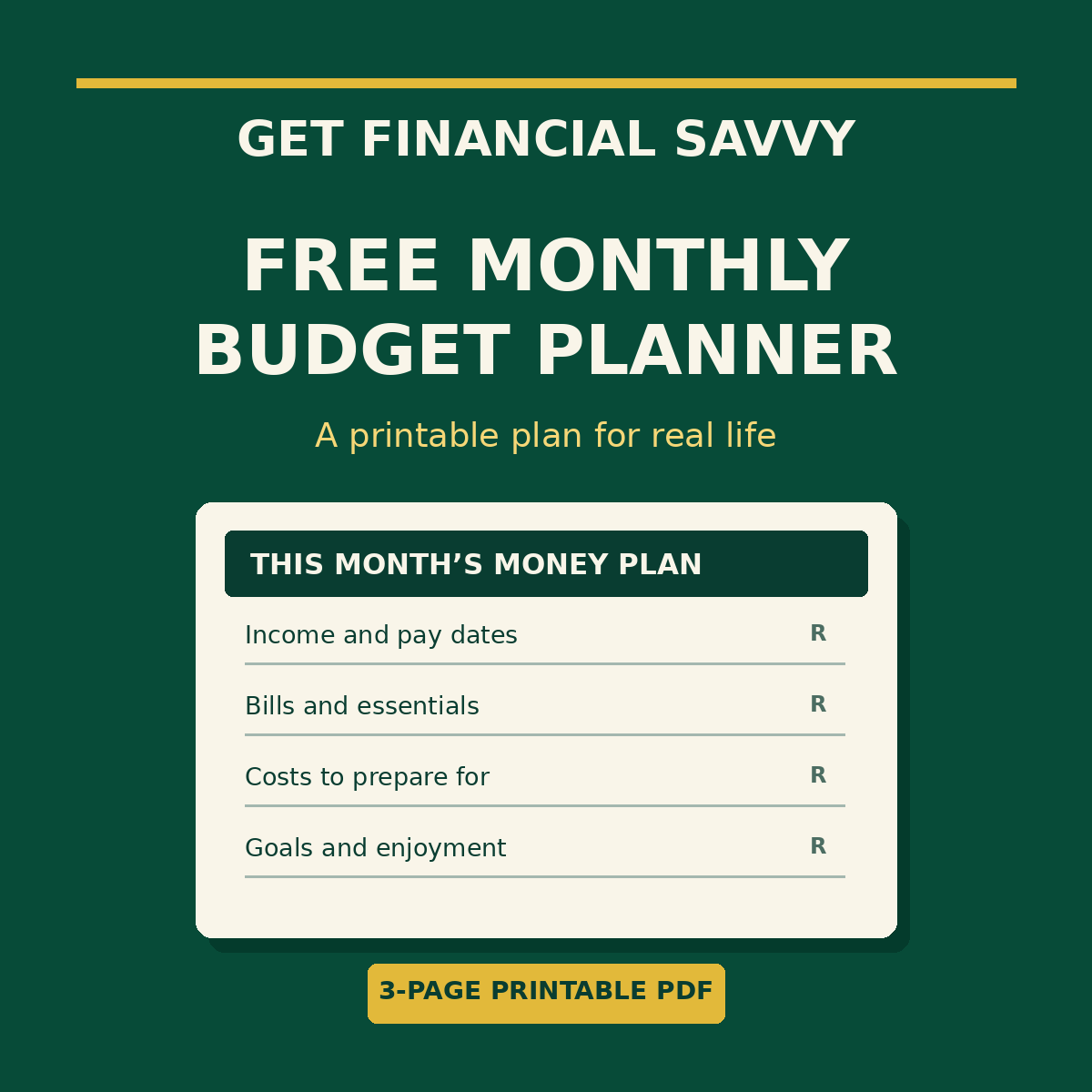
The free GFS Monthly Budget Planner gives you space to write down income dates, monthly commitments, irregular expenses, an enjoyment amount and a short weekly review. Begin with your best estimates, then improve the plan using your actual spending.
Download the free GFS Monthly Budget Planner below.
https://getfinancialsavvy.co.za/product/gfs-monthly-budget-planner-free-printable/
Get Financial Savvy provides general educational information, not personalised financial, debt, tax or legal advice. If repayments are unmanageable, seek help from an appropriately qualified professional or registered debt counsellor before making major changes.