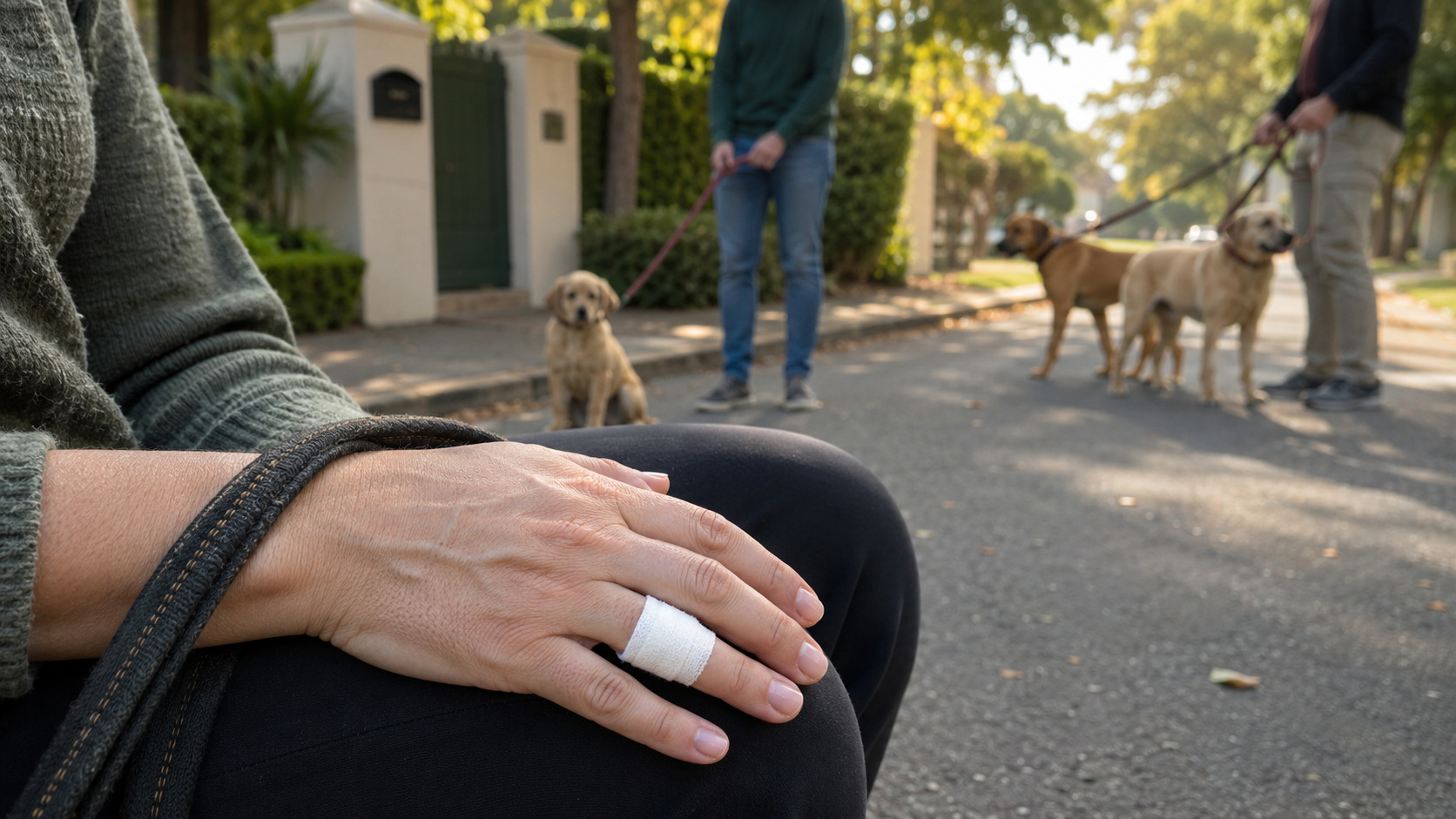
I created my free guide to Prescribed Minimum Benefits after a frightening experience involving my own dogs and a puppy being walked on a lead in our street.
What happened
My two dogs managed to slip out and attacked the puppy. In the scramble to pull them away, the frightened puppy bit the ring finger of my left hand. The injury was severe—the flesh was torn down to the bone. Because I have a replacement knee, I was deeply concerned about the possible consequences of an infection. My sister rushed me to the emergency department at the nearest private hospital, where the doctor cleaned and stitched the wound, administered an injection and prescribed antibiotics. The hospital receptionist was adamant that the treatment would not be covered because I had been treated in the emergency department rather than admitted to a hospital ward. I was told that, if I did not want to pay privately, I would have to go to the government hospital next door. Having worked as a financial adviser for many years, I believed that the circumstances and severity of the injury could bring the treatment within the Prescribed Minimum Benefit rules. However, no amount of discussion changed the hospital’s position, and I had to pay the account upfront. I subsequently submitted the claim to my medical scheme with the relevant information. The scheme accepted the claim as a Prescribed Minimum Benefit arising from the traumatic injury, and every cent I had paid was refunded.The important point: Treatment in an emergency department is not automatically excluded simply because the patient was not admitted to a hospital ward. The diagnosis, severity, treatment provided and applicable benefit rules must be considered.
What my claim did—and did not—prove
My experience does not mean that every dog bite, injury or visit to an emergency department automatically qualifies as a Prescribed Minimum Benefit. A claim must still be assessed according to the medical facts and the applicable legal requirements. These may include the legal definition of an emergency medical condition or the diagnosis and treatment specified in a Diagnosis Treatment Pair. The medical scheme may also consider matters such as authorisation, the use of a Designated Service Provider, the treatment provided and whether the claim contains the necessary clinical information. What concerned me was how easily someone without knowledge of the system might simply accept what they were told, pay an account they could not afford, or leave without receiving treatment.Why I created the free guide
Prescribed Minimum Benefits Made Clear explains, in plain language:- the three parts of Prescribed Minimum Benefits;
- what may qualify as an emergency medical condition;
- how Diagnosis Treatment Pairs work;
- the 26 Chronic Disease List conditions;
- how Designated Service Provider rules, treatment protocols and medicine formularies may affect a claim;
- what records to retain; and
- what to check when a claim is declined.
Understand your Prescribed Minimum Benefits
Download the free Get Financial Savvy guide and keep it available when you review a claim or communicate with your medical scheme.
Get the Free PMB Guide